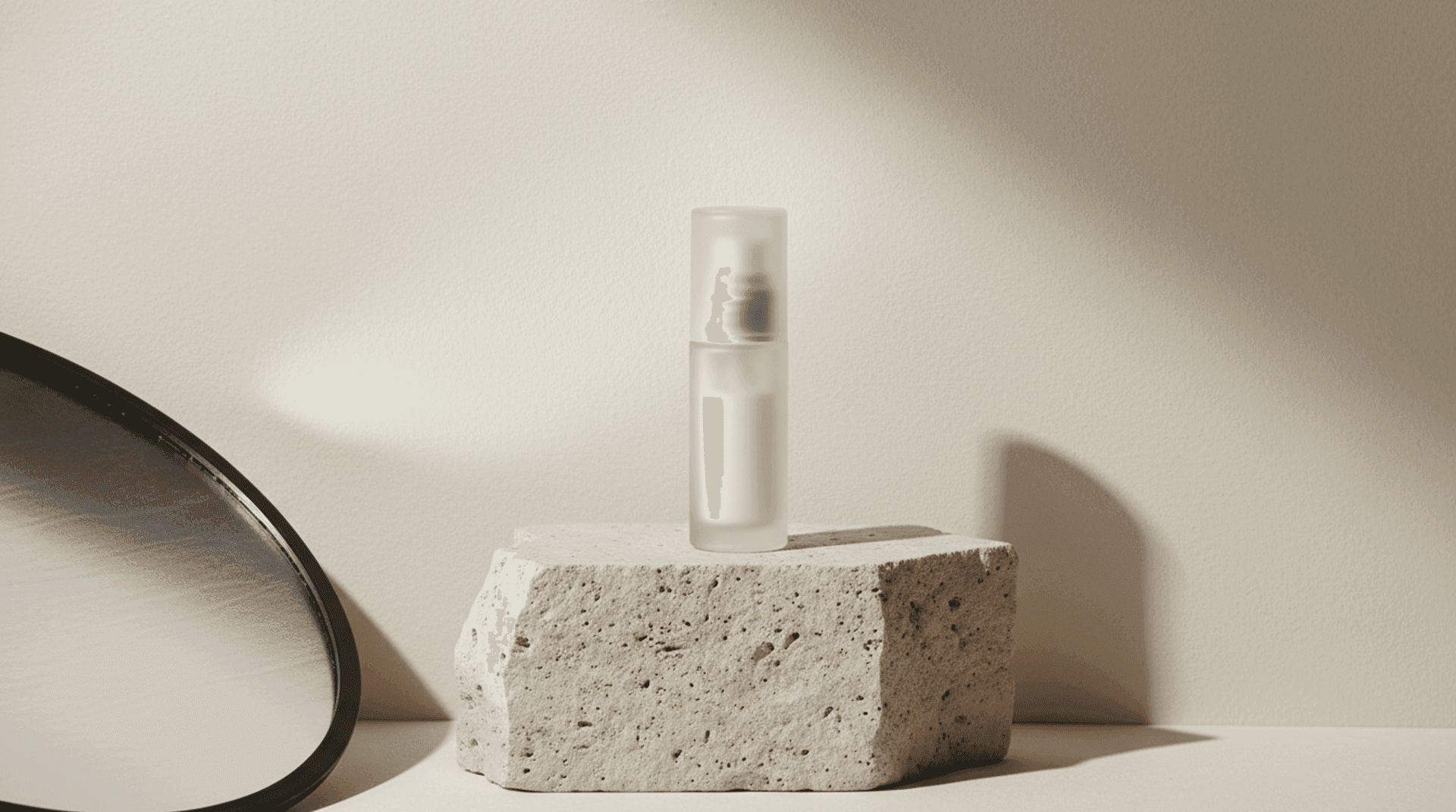
The Salesperson You Never Hired
You have a salesperson working your website right now. They greet every visitor before you say a word. They set the price expectation, communicate whether you're careful or careless, and decide — within a heartbeat — whether someone feels they belong here. You didn't interview them. You didn't train them. They're your photography.
And for most beautiful, capable founders, that salesperson is showing up to work in slightly wrinkled clothes. A phone snap taken in mixed lighting. A treatment room photographed at an awkward angle, with a power socket in the corner and a slightly grey cast over everything. A headshot cropped from a wedding.
None of it is bad, exactly. It's just... a little off. And that little-off is doing quiet, expensive work — every hour of every day — telling your dream clients something you never meant to say.
Why Imagery Talks Faster Than Words
Here's the uncomfortable truth about your website: people see it before they read it. The eye lands on the image first, the headline second, the body copy a distant third — if at all.
That means your images are not decoration sitting around your message. They are your message, delivered before the conscious mind has even engaged.
So when we talk about professional photography for a website, we're not talking about vanity or polish. We're talking about the single fastest channel you have for communicating who you are. Imagery is the part of your brand that arrives first and lingers longest.
And here's the thing nobody tells you: visitors can't articulate why a phone photo feels less trustworthy than a commissioned one. They just feel it. The light is flatter. The composition is accidental rather than intentional. The colours don't quite agree with each other. Their nervous system registers "amateur" before their mind forms a thought — and the halo of that judgment quietly spreads to everything else. If the photos are casual, maybe the work is too.
The Gap Between a Snap and a Photograph
Let me make this concrete, because "professional photography" is one of those phrases that sounds expensive and vague at the same time.
A phone snap captures what was there. A photograph captures what it felt like to be there. That's the whole gap — and it's where clients are won or lost.
Think about the last time you walked into a space that felt genuinely premium. A beautifully lit clinic. A calm therapy room. A hair salon that smelled like bergamot and looked like a magazine. The feeling wasn't an accident. Someone chose the light. Someone removed the clutter. Someone decided what your eye should rest on.
Professional photography does exactly that — for the version of your space and your work that lives online. It's the difference between documentation and direction.
What the camera actually changes
- Light becomes intentional. A professional doesn't photograph what the light happens to be doing; they shape it. Soft, directional light makes skin glow, surfaces feel tactile, and rooms feel calm rather than clinical.
- Composition stops being accidental. Where the subject sits in the frame, what's in focus, what breathes in the negative space — these are decisions, and decisions read as care.
- Colour becomes a language. A consistent, graded palette across every image is what makes a site feel like one world instead of a scrapbook. Mismatched white balances quietly scream "stitched together."
- Clutter disappears. The cable, the cardboard box, the half-empty product bottle — the things you stop seeing in your own space — get composed out, so the viewer sees only the story you want told.
None of these are things a visitor will name. All of them are things a visitor will feel. That's the nature of the silent salesperson: it never explains itself, it just persuades.
Your Photos Are Carrying Your Price Tag
Here's where this gets directly commercial, especially for premium beauty, aesthetic-medicine, and wellness brands.
The quality of your imagery sets the price your clients expect to pay — long before they reach your rates.
When someone lands on a site full of warm, considered, professional photography, an expectation forms: this is a premium experience, and it will cost accordingly. They arrive at your prices already primed to accept them. The photography did the pre-selling.
When the imagery is casual, the opposite happens. The visitor unconsciously files you as "budget" or "hobby," and then your prices land as a jolt rather than a confirmation. You end up justifying numbers your own website undermined. You attract the bargain-hunter and quietly repel the client who would have happily paid full rate for someone who clearly takes care of the details.
This is why two practitioners with identical skill and identical pricing can have completely different businesses. One looks like an investment. The other looks like a risk. The work is the same. The photography is not.
If you run a salon or studio where the space is part of the product, this matters even more — your interiors, your team, the texture of the experience all need to be felt through the screen. (We dug into how this plays out for one industry in particular over in the modern hair salon website.)
Where Professional Photography Earns Its Keep
You don't need a thousand images. You need the right ones, in the places where decisions get made.
The hero — your threshold moment
The first thing a visitor sees should do what your front door does in person: signal, instantly, what kind of world they've entered. This is where commissioned photography pays for itself fastest. One genuinely beautiful, brand-aligned image at the top of your homepage resets every expectation that follows.
The faces — warmth made visible
People hire people. A real, well-lit portrait of you — relaxed, present, looking like someone they'd feel safe with — does more for trust than three paragraphs of "about me." Stock photography of a stranger in a lab coat does the opposite: it whispers that something here isn't quite real.
The work itself — proof, beautifully framed
Your treatments, your results, your craft. This is where photography stops being atmosphere and starts being evidence — and where it's easiest to get it wrong, because results imagery has its own rules of honesty and consistency. (It's worth getting this part right; there's a whole craft to it.)
The space and the texture — the feeling
The details. The hands at work. The light through the window. The product on the shelf. These are the images that make a brand feel lived in and real, the connective tissue between the big hero shot and the practical proof.
"But I Can't Afford a Shoot Right Now"
I hear this constantly, and it's a fair worry. So let me reframe it.
You're not choosing between paying for photography and not paying for photography. You're choosing between paying a photographer once, or paying — invisibly, indefinitely — in the clients who didn't quite trust the site enough to book. The amateur photos aren't free. They have a cost; it's just hidden in the bookings you never see.
And it doesn't have to be everything at once. A single half-day shoot, well-directed, can produce a hero image, a portrait, and a handful of texture shots — enough to lift an entire site out of "fine" and into "this feels like them." You can build from there.
The mistake is treating photography as the thing you'll sort out later, after the website is built — as if it's the last coat of paint. It isn't paint. It's the structure. A site designed around real, considered imagery is a fundamentally different object from one where photos get dropped into placeholder slots at the end. Beautiful design and beautiful photography are one decision, made together.
- It's the first thing every visitor processes — faster than your words, and it colours how they judge everything else
- It sets the price your clients expect before they reach your rates; casual photos quietly file you as "budget"
- The gap between a snap and a photograph is intention: directed light, deliberate composition, a consistent colour language, and clutter removed
- Amateur imagery isn't free — its cost is hidden in the bookings you never see
- Treat photography as structure, not the final coat of paint; design and imagery are one decision made together
The Quietest Investment You'll Make
The frustrating, beautiful thing about professional photography is that when it's working, no one notices it. There's no moment where a visitor thinks "what wonderful lighting." They simply feel that you're the kind of person who gets things right — and that feeling does the selling.
That's the whole game. Your dream client decides whether you're for them in the space of a breath, and your imagery is doing most of the talking in that breath. You can leave that conversation to a hurried phone snap, or you can hire it the salesperson it deserves.
At Orpheus Studio, we don't bolt photography onto a finished site — we build the experience and the imagery as one, so every image lands exactly where a decision gets made. If you're ready for your website to feel as considered as the work you do, let's design something that sells in a single glance.