The Quietest Decision Your Patient Will Ever Make
A woman is lying awake at 11:40pm, phone glowing against her face. She's been thinking about a treatment for months — maybe a year. Tonight she finally types your clinic's name into the search bar. What happens in the next ninety seconds decides whether she books a consultation or closes the tab and goes back to scrolling. She will never tell you which one she chose.
This is the reality of a website for an aesthetic medicine clinic. The most important conversations happen when nobody is watching — late at night, in private, with a person who is equal parts hopeful and afraid. Your site is the only member of your team awake at that hour.
And here's the uncomfortable truth: a beautiful website is not the same as a website that books patients. I've seen gorgeous clinic sites that quietly leak every visitor, and plain ones that fill a calendar. The difference is rarely taste. It's anatomy — how the pieces are arranged to carry someone from anxious curiosity to a confident "yes."
So let's dissect one. Not the visuals — the architecture underneath.
A Website Is a Patient Journey, Built in Glass
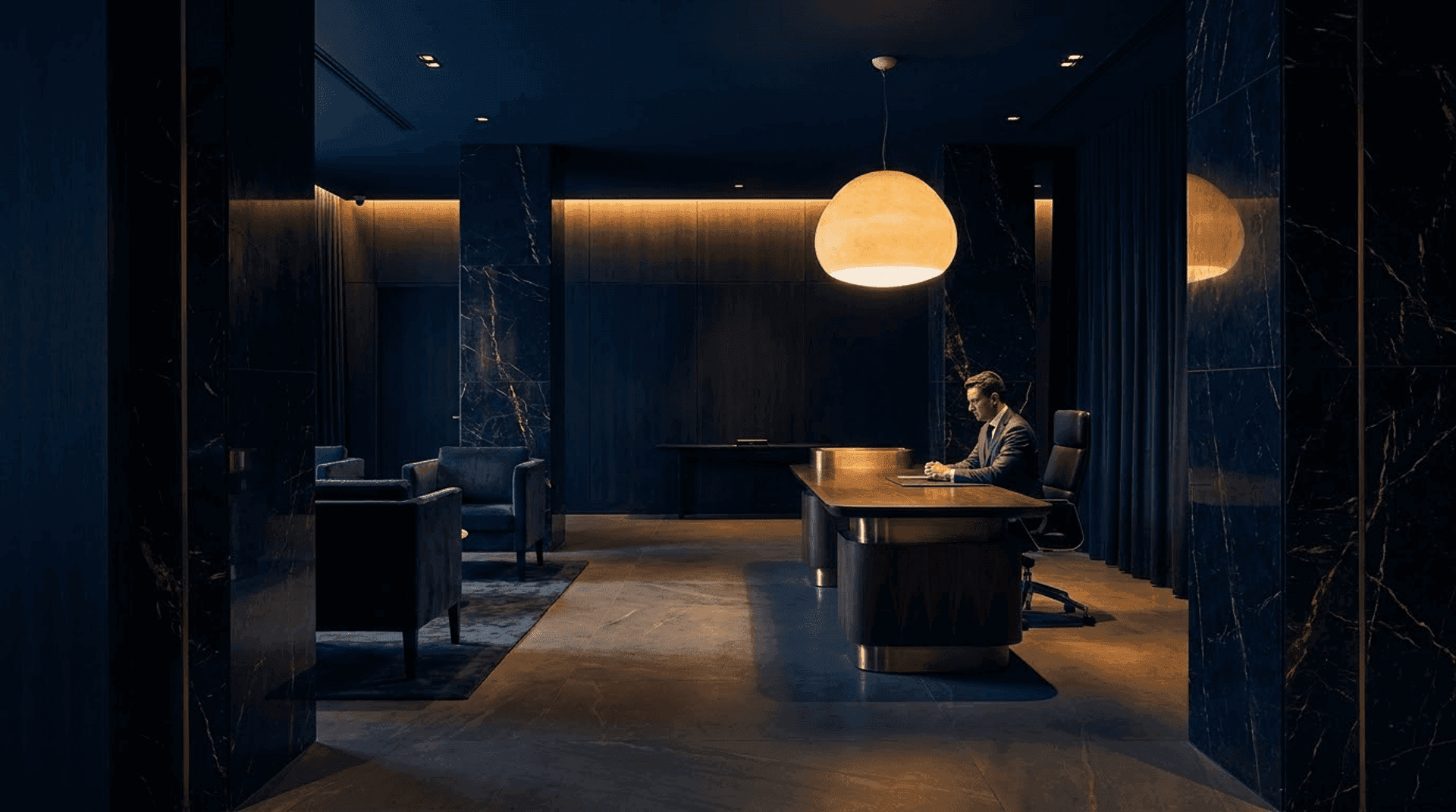
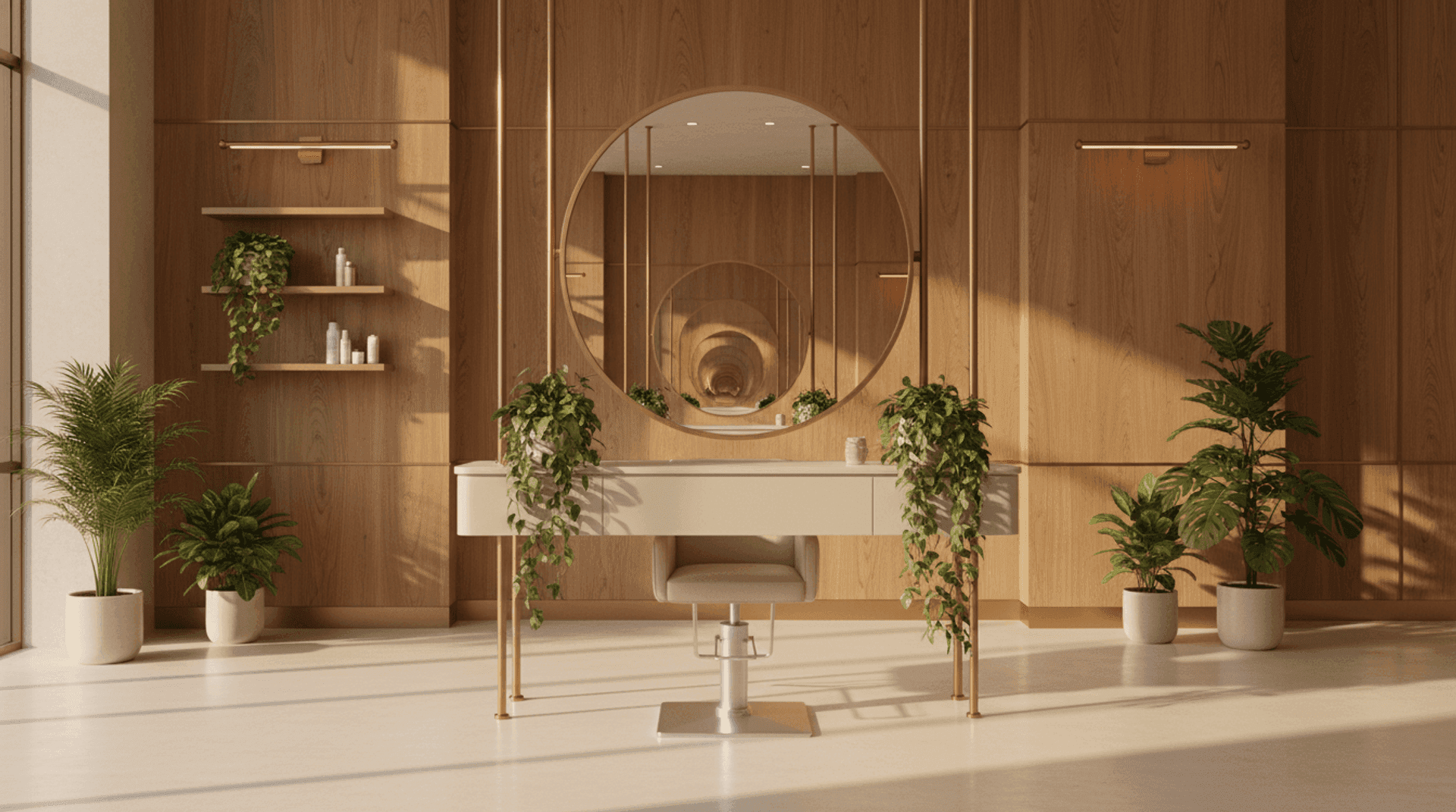
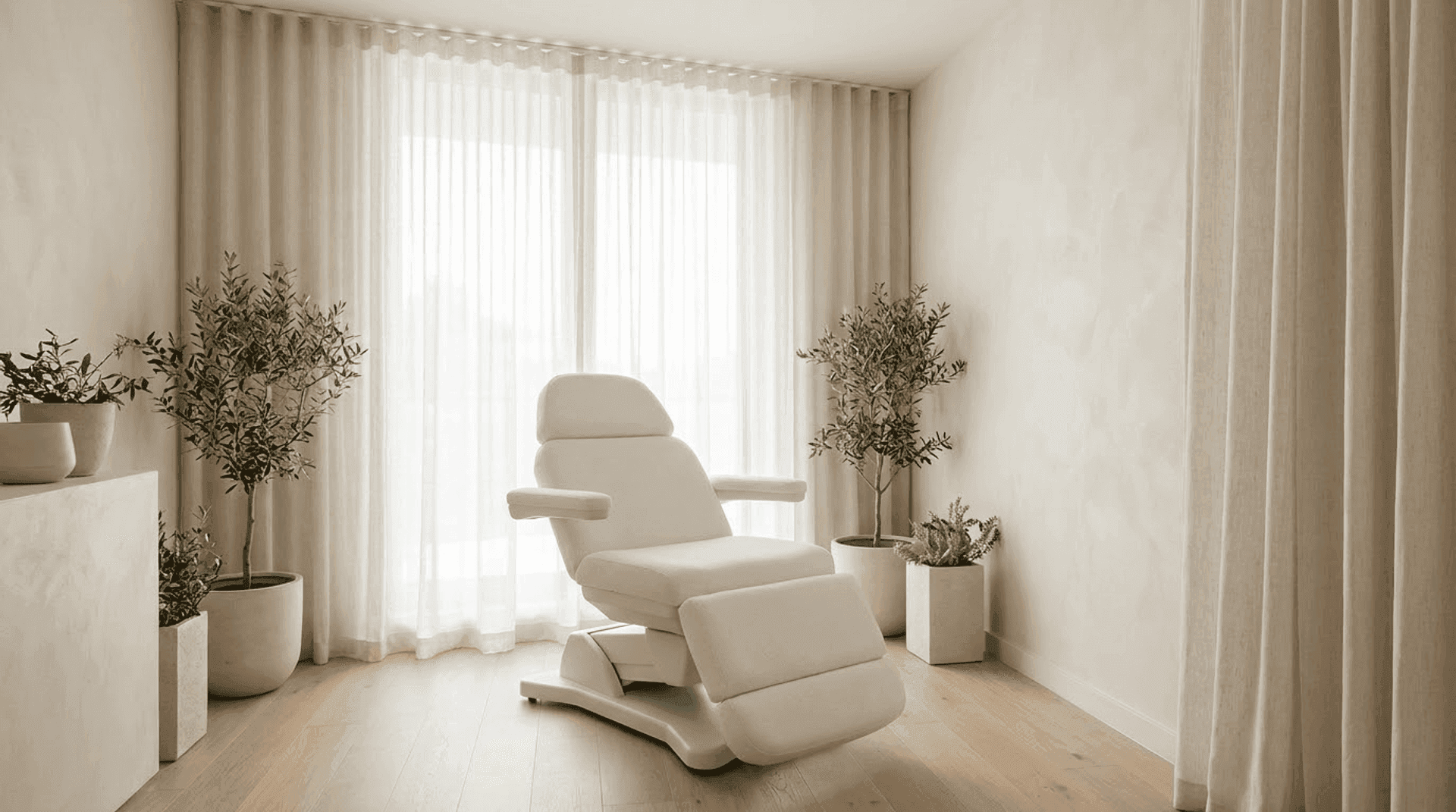
When we designed Lumière, our concept clinic for aesthetic medicine, we kept returning to one image: the website as the building before the building. Long before a patient sees your real reception, they walk through a digital one. The lighting, the pace, the way each room opens into the next — all of it happens on screen first.
A high-converting clinic site has three structural rooms, and each one does a different job for a person in a different emotional state.
You are not designing pages. You are designing the moment someone decides they are safe enough to want what they came for.
The homepage reassures. The treatment pages inform and qualify. The booking flow removes the last reason to hesitate. Get the order — and the emotional logic — right, and the site does the work of your best front-desk person, all night long. Get it wrong, and you're paying for ads that send people to a door that doesn't open.
Room One: The Homepage Exists to Lower the Heart Rate
The single biggest mistake aesthetic clinics make online is treating the homepage like a brochure — a list of everything they offer, shouted at once. But the visitor arriving at your homepage isn't ready for a menu. She's ready to be reassured that this is the right place for someone like her.
So the homepage has exactly one emotional job: calm the nervous system and signal "you're in good hands."
That happens in the first screen, before a single word is read. We know this with some precision.
In practice, the homepage that converts does a few quiet things well:
- It leads with a feeling, not a price list. A confident headline, generous whitespace, one real image of your space or your hands at work — not a stock photo of a stranger's flawless cheekbones.
- It establishes credibility without bragging. Your medical qualifications, your years of practice, the named doctor behind the clinic. In aesthetic medicine, the person is the product.
- It points to exactly one next step. Not five. One primary path — usually "Book a consultation" — repeated calmly, never desperately.
This is the same principle we wrote about in what your dream client decides in 3 seconds: the design is the message, long before the copy is read. A homepage that feels rushed, cluttered or generic tells an anxious patient this place is rushed, cluttered or generic — regardless of how skilled you actually are.
Room Two: Treatment Pages Are Where Fear Goes to Be Answered
If the homepage lowers the heart rate, the treatment page is where the real work happens. This is the most under-built part of nearly every clinic website I review — and the part most directly tied to bookings.
Here's why it matters so much. By the time someone is reading your page on, say, lip filler or laser treatment, they are no longer a casual browser. They have a specific concern and a specific fear. They are silently asking three questions, in this order:
- Will this hurt, and is it safe?
- Will I look like myself, or like everyone else?
- Can I trust the person holding the needle?
A treatment page that answers those three questions, in that order, converts. One that just lists the treatment name, a one-line description and a price does not. It leaves the fear unaddressed — and fear, unaddressed, always wins.
Lead with the concern, not the procedure
Patients don't search for "hyaluronic acid dermal filler." They search for "tired-looking under eyes" or "lines that make me look angry." Your treatment pages should open in the patient's language — the problem they feel — before introducing your clinical solution. Meet them where the worry is.
Make the process radically transparent
What actually happens during the appointment? How long does it take? What does recovery look like? Is there downtime? A simple, honest step-by-step is one of the most powerful trust-builders you can put on a page, precisely because so few clinics bother. Transparency reads as confidence. Vagueness reads as something to hide.
Be scrupulous with claims — this is YMYL territory
Aesthetic medicine sits squarely in what search engines and regulators treat as "Your Money or Your Life" content. Outcomes, safety and medical claims must be accurate, evidence-aware and never overstated. This isn't only an ethical obligation — it's a credibility signal. Hedge honestly ("most patients see..."), cite where you can, and never promise a result you can't guarantee. Patients reading carefully at midnight can smell a guarantee that's too good to be true.
Use before-and-after evidence with restraint
Visual proof is the strongest persuader you have in this field — and the easiest to get wrong, both legally and aesthetically. Done with consent, consistency and taste, a results gallery can do more than any paragraph of copy. Done loudly, it reads as a sales pitch and erodes the very trust you're building.
Room Three: Booking Is Where Most Clinics Lose the Patient
You did everything right. You calmed her at the door, you answered her fears, she wants to book. And then your site asks her to ring the clinic during business hours, or fill in a fourteen-field form, or email an address and wait.
She won't. The window of intent in aesthetic medicine is short and emotional. The patient who is ready at 11:40pm is rarely still ready at 9am when your phone line opens.
Every extra click between "I want this" and "it's booked" is an invitation to reconsider.
A booking flow that converts respects how fragile that moment of intent is:
- It's available the instant the patient is ready — not gated behind office hours. Even a simple "request a callback" that captures the lead immediately beats a phone number that goes to voicemail.
- It asks for the minimum. Name, contact, treatment of interest, preferred time. You can gather the medical detail later. Every field you add is a reason to abandon.
- It confirms warmly and immediately. A patient who books online and hears nothing back assumes it didn't work. A calm, human confirmation — on screen and by email — closes the loop and lowers anxiety.
- It treats the consultation as the real product. In aesthetic medicine, you're rarely selling the treatment online — you're selling the conversation about it. Framing the next step as a low-pressure consultation, not a commitment to a procedure, dramatically lowers the barrier to clicking.
The technical detail matters here too. A booking flow that stutters, lags or feels clunky undoes everything the homepage promised. On the device most of your patients are using — their phone, late at night — speed and smoothness aren't a luxury. They're the difference between a booking and a bounce.
- Homepage — lowers the heart rate in 50ms: a calm first impression, the named doctor's credibility, and one clear next step.
- Treatment pages — answer the patient's three silent fears in order (Is it safe? Will I still look like me? Can I trust you?), in their language, with radical transparency.
- Booking — available the instant intent strikes, minimal fields, instant warm confirmation, framed as a consultation not a commitment.
- Throughout — be accurate and evidence-aware (this is YMYL medical content), and let restrained before-and-after proof do the persuading.
- Underneath it all — speed and smoothness on mobile, because the most important visit happens privately, at night, on a phone.
The Building Behind the Building
The strange, beautiful thing about an aesthetic medicine website is that it does its most important work when you'll never see it. While you sleep, it greets the anxious, answers the fearful, and quietly walks the ready ones to your door.
A template can't do that. A template doesn't know that the homepage is for calming, the treatment page is for fear, and the booking flow is for catching intent before it fades. It just lays the rooms out in whatever order came with the theme — and hopes.
Your patients deserve better than hope. And so does the work you do.
At Orpheus Studio, we build clinic websites the way you'd build the clinic itself — every room designed for the person standing in it. You can walk through Lumière, our aesthetic medicine concept, to see this anatomy in motion, or explore how we work when you're ready to give your clinic the website it deserves.